


Quick Summary
- The overlay-vs.-replacement decision is a structural engineering call first and a financial call second — base condition determines which option is even viable.
- A Petromat overlay on a structurally sound base can deliver 12–18 years of performance in Colorado, with 10-year costs significantly below full replacement.
- Denver’s 150+ annual freeze-thaw events make a professional structural assessment non-negotiable before committing budget in either direction.
The contractor is recommending full replacement. The number they’ve handed you is somewhere between $80,000 and $150,000 for a mid-size commercial lot — and you’re not sure whether to sign off or push back.
You’re right to pause.
For a 40,000 square foot commercial parking lot in the Denver metro, the spread between a Petromat overlay and full-depth replacement can easily exceed $100,000. Getting this wrong — approving a full replacement that wasn’t structurally necessary, or approving an overlay on a lot with a failed base structure — is a costly mistake in either direction. The framework for making this call correctly isn’t complicated, but it has to start in the right place: structural integrity, not cost.
How to Assess Structural Integrity Before You Decide Anything
Most property managers receive pavement proposals that lead with price. A reputable contractor leads with a structural assessment — because the condition of your base determines which option is even on the table.
Surface Damage vs. Base Damage — What’s the Difference?
This is the most consequential distinction in asphalt decision-making, and it’s where most property managers get talked past.
Surface damage — oxidation, minor cracking, surface raveling, and fading — is normal wear. Asphalt oxidizes under Colorado’s UV exposure. Hairline cracks appear. The pavement looks rough or pitted. This is a surface-treatment and overlay candidate.
Base damage is structural. It happens when water infiltrates through unaddressed surface cracks, saturates the aggregate base, and then freezes and expands — repeatedly. The result is subgrade instability, and no surface treatment fixes that. Applying an overlay to a failed base structure is like reshingling a roof with a rotted deck. It won’t hold.
The 5 Signs Your Pavement Has Base Failure
A thorough site evaluation looks for these indicators:
- Alligator (fatigue) cracking — interconnected cracking that resembles alligator skin; indicates load-related base failure, not surface wear
- Rutting or depression — pavement that sags or deforms under vehicle load, signaling subgrade instability
- Edge cracking with heaving — frost heave pushing up pavement sections, particularly near drainage edges
- Water pooling after rain or snowmelt — indicates grade failure or compromised drainage structure beneath the surface
- Soft spots — areas where the pavement flexes or feels spongy underfoot; the base has lost load-bearing capacity
If you’re seeing one or two of these in isolated areas, targeted full-depth patching followed by an overlay may still be viable. If these signs cover more than 25–30% of the lot, full replacement becomes the more defensible recommendation.
What a Professional Assessment Actually Looks at
When Foothills Paving & Maintenance evaluates a commercial lot, we’re not just walking the surface with a clipboard. We assess drainage patterns, base depth (through core sampling where warranted), traffic load history, and pavement age relative to original installation specs. We also evaluate whether a prior overlay already exists — because that affects what’s structurally viable and what will clear curb and ADA height requirements.
The Federal Highway Administration’s Pavement Preservation guidelines establish Pavement Condition Index (PCI) thresholds for overlay eligibility. Foothills’ assessment process is calibrated to those standards — so when we give you a recommendation, it’s grounded in the same criteria used for federally maintained infrastructure, not contractor intuition.(FHWA Pavement Preservation Resources)
What Is a Petromat Overlay — and Why Does It Change the Cost Math?
Standard overlays involve milling the existing surface (or applying a tack coat) and installing a new asphalt lift on top. They’re effective when conditions are right — but they carry one known vulnerability: reflective cracking. Existing cracks in the old surface eventually telegraph through the new asphalt layer, typically within 3–5 years in Colorado’s climate.
Petromat changes that equation.
How Petromat Fabric Extends Overlay Lifespan
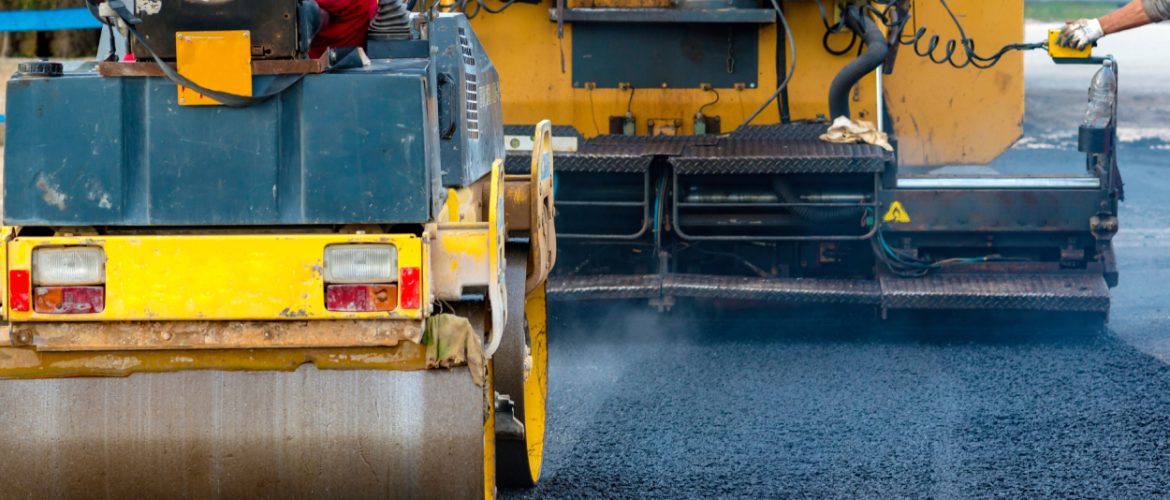
Petromat is a non-woven polypropylene geotextile fabric installed between the existing pavement surface and the new asphalt overlay. Saturated with tack coat during installation, it acts as a stress-absorbing interlayer — mechanically interrupting the crack propagation path between layers.
In practice, what this does is delay reflective cracking by 5–8 years compared to a standard overlay in Colorado conditions. That’s not a marketing claim — it’s a function of how freeze-thaw cycles work. Denver averages more than 150 freeze-thaw events per year. Each cycle creates movement in the pavement structure. Without an interlayer, that movement travels straight up through the overlay. With Petromat, it dissipates.
For property managers doing 10-year cost math, that delay is significant. An overlay that lasts 12–15 years instead of 6–8 years doesn’t just reduce resurfacing frequency — it defers the full replacement decision further, sometimes past the point where a capital reserve study gets reset or a property changes ownership.
When Petromat Overlay Is the Right Call
Our asphalt overlay services are well-suited to lots that meet all of the following:
- PCI score in the 40–70 range — moderate deterioration, surface wear present, but base is structurally sound
- No active alligator cracking beyond isolated patches (those patches get full-depth repaired first)
- Existing asphalt thickness of at least 3 inches — enough structural depth to support the additional lift
- No prior overlay that has already reached curb or ADA height limits
- Adequate drainage grade — water needs a clear path off the surface post-resurfacing
When these conditions are met, a Petromat overlay is the right first-choice investment — not a compromise or a delay tactic.
The 10-Year Cost-Benefit Analysis
Here’s where the “overlay is cheap but doesn’t last” narrative breaks down under real math.
Real Cost Scenarios — Overlay vs. Full Replacement on a Commercial Lot
The following figures are based on typical commercial parking lots in the Denver metro area. Costs vary by site conditions, access, and mobilization. These represent a reasonable mid-range estimate for planning and board-level budget discussions.
| Petromat Overlay | Full Replacement | |
| Upfront cost (40,000 sq ft) | $60,000–$90,000 | $160,000–$220,000 |
| Cost per square foot | $1.50–$2.25 | $4.00–$5.50 |
| Expected lifespan (Colorado) | 12–18 years | 20–25 years |
| Mid-cycle maintenance | Crack seal + sealcoat at year 5–7 | Crack seal + sealcoat at year 7–10 |
| 10-year total cost estimate | $75,000–$105,000 | $175,000–$235,000 |
| Best-fit pavement condition (PCI) | 40–70, sound base | Below 40, or confirmed base failure |
Why “Cheaper Upfront” Is the Wrong Frame
The real question isn’t what this costs today. It’s what this pavement costs over the next 10 years, given your base condition, your climate, and your maintenance discipline.
A Petromat overlay on a sound base — properly maintained — is a legitimate capital investment with a real return horizon. A full replacement on a lot that doesn’t actually have base failure is overcapitalized. You’re spending $80,000–$130,000 more than necessary to solve a problem that doesn’t exist.
That said, approving an overlay on a lot with an undiagnosed base failure is equally costly — just slower to surface. The $60,000 saved upfront gets consumed by remedial work within 3–5 years, and you’re still facing replacement. The structural assessment step is what separates a smart cap-ex decision from deferred maintenance with extra steps.
Not sure which category your property falls into? Schedule a free pavement assessment— we’ll give you an honest read on what the base actually needs, with transparent pricing for both paths.
When Full-Depth Replacement Is the Right Investment
There are situations where full-depth asphalt removal and replacement isn’t the expensive option — it’s the only option that makes financial sense over time.
The Conditions That Make Overlay a Waste of Money
- Alligator cracking covering more than 25–30% of the lot — base failure is too widespread for patch-and-overlay to hold
- Subgrade failure confirmed by core sampling — the problem is below the asphalt, and no surface treatment reaches it
- An existing overlay already at or near ADA height or drainage elevation limits
- Pavement age exceeding 25 years with no documented maintenance history — the unknown variables in the base outweigh the overlay savings
- Active drainage failure requiring re-grading, which requires removal anyway
What to Expect from a Full Replacement in Colorado
A properly executed full replacement includes removal of existing asphalt and, where warranted, base material; re-grading for drainage; new aggregate base compaction; and new hot-mix asphalt installation in lifts. Foothills uses premium hot-mix asphalt formulations and state-of-the-art paving equipment calibrated for Colorado’s temperature variability during paving season.
When site conditions require it, this is the investment that protects your property for 20–25 years. It’s also the recommendation we make when the structural assessment supports it — not before.
Colorado’s Climate Makes This Decision More Complex — Here’s Why
No national pricing guide accounts for what Denver’s climate does to this decision. Here’s what those guides leave out.
Denver’s 150+ annual freeze-thaw events are among the highest of any major metro in the country. Every freeze-thaw cycle creates hydraulic pressure in any crack that holds water. In pavement that’s already showing surface deterioration, that process accelerates exponentially. A lot in Denver showing moderate surface wear today can move to active base failure within two to three winters if cracks go unaddressed and water infiltration continues.
This is why crack sealing and infrared asphalt repair aren’t optional line items in Colorado — they’re the interventions that preserve overlay eligibility. A lot that gets properly crack-sealed in years 6–8 of its life is a strong overlay candidate at year 12. The same lot, neglected through two winters of freeze-thaw cycling, may be a replacement candidate by year 10.
Foothills’comprehensive asphalt repair and maintenance programs are specifically engineered for Colorado’s climate — designed to intercept the deterioration cycle before it reaches the point where the decision collapses to one option.
The Framework, Straight
Before you approve any pavement proposal, work through these five questions in order:
- Has a structural assessment been conducted? Surface appearance is not a reliable proxy for base condition.
- What is the PCI range? Any competent contractor should provide this or explain their recommendation without it.
- Is Petromat included in the overlay proposal? A standard overlay and a Petromat overlay are not the same product or the same investment.
- What does the 10-year math look like — not just the upfront number? Use the scenario table above as your starting framework for board discussions.
- Ask the contractor when they’d recommend against the more expensive option. That answer tells you a lot about who you’re dealing with.
Over 25 years of serving Denver-area commercial properties, Foothills Paving & Maintenance has built its reputation on giving honest answers to that last question. We recommend overlay when the site supports it. We recommend replacement when it doesn’t. And we show you the assessment — in writing, with transparent pricing — before you commit budget in either direction.
Schedule Your Free Pavement Assessment
Whether you’re heading into budget season, responding to a board inquiry, or looking at a lot that started showing signs this spring, the right next step is a detailed site evaluation, not a proposal.
Contact Foothills Paving & Maintenance for a thorough, no-obligation pavement assessment.
📞 303-462-5600
📍 5040 Tabor St., Wheat Ridge, CO
🗓️ Schedule your free estimate online | Monday–Friday, 8:00 am–5:00 pm
We’ll walk your property, give you our honest read on base condition, and present transparent pricing for the option that actually fits — not the option with the bigger margin.
Frequently Asked Questions
How do I know if my parking lot needs an overlay or full replacement?
The determining factor is the base condition, not surface appearance. A structural assessment looks for alligator cracking, rutting, soft spots, and drainage failure — signs that deterioration has reached the subgrade. If your base is structurally sound and your PCI falls in the 40–70 range, a Petromat overlay is likely the right call. If base failure is confirmed or covers more than 25–30% of the lot, full replacement is the more defensible investment.
How long does an asphalt overlay last on a commercial lot in Colorado?
A standard overlay typically lasts 6–10 years in Colorado’s climate. A Petromat overlay — which uses a stress-absorbing geotextile interlayer to delay reflective cracking — extends that to 12–18 years when installed on a structurally sound base and maintained with periodic crack sealing and sealcoating. Denver’s 150+ annual freeze-thaw events make the Petromat interlayer particularly valuable here compared to markets with milder winters.
Can you put a second overlay on asphalt that’s already been overlaid once?
In some cases, yes — but it depends on total pavement depth and curb/ADA height clearances. If the existing overlay is in sound structural condition and hasn’t reached the elevation limit, a second Petromat overlay may be viable. However, multiple overlays can create drainage and edge-transition complications over time. A core sample and elevation check during the site assessment will determine whether a second overlay is structurally sound or whether full removal has become the more practical path forward.