

Quick Summary Most Denver parking lot ADA violations aren’t caused by bad striping — they’re caused by subbase grading failures that shift pavement slopes out of compliance over time. Federal ADA standards set the baseline, but Denver’s freeze-thaw climate makes ongoing maintenance and proper base preparation critical to staying compliant year-round. A thorough site evaluation by an experienced Denver paving contractor is the most reliable way to identify hidden grading issues before they become costly violations. Your parking lot looks fine. The lines are
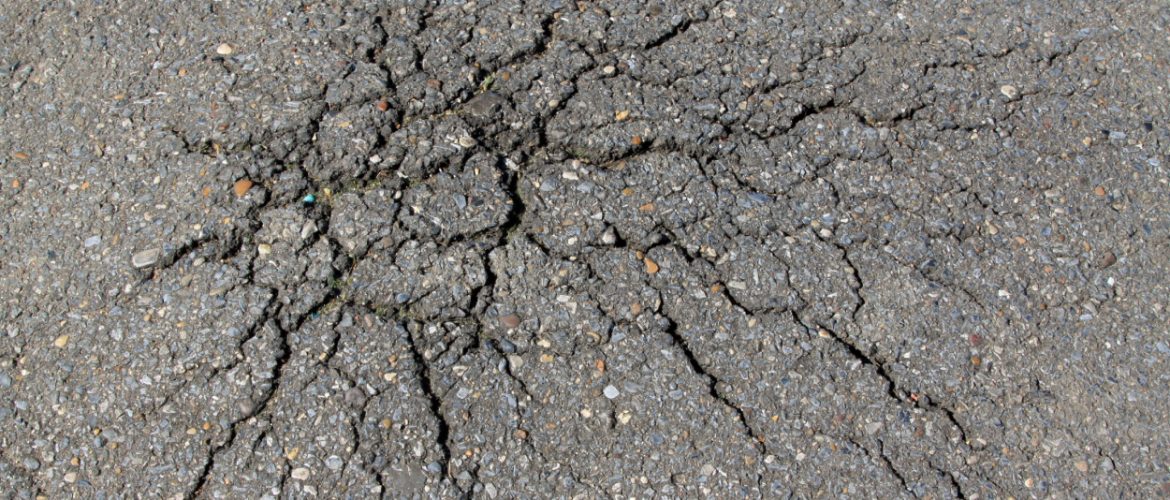
Quick Summary Surface cracks and oxidation are cosmetic — they’re fixable with sealcoating or crack sealing. Severe alligator cracking, rutting, and water pooling that won’t drain signal a failed subbase that requires full-depth replacement. Denver’s Front Range freeze-thaw cycles and high-altitude UV exposure accelerate subbase deterioration faster than in most U.S. markets — making early, accurate diagnosis critical to protecting your property investment. Before calling a contractor, you can run a simple DIY deflection test on your parking lot to gauge structural severity
Quick Summary Most driveway cracks in Wheat Ridge aren’t a surface problem — they’re a subgrade problem that started before the first shovel of asphalt was ever poured. Colorado’s freeze-thaw cycles and high-altitude UV exposure accelerate failure, but only when the structural foundation beneath the pavement is compromised. Budget contractors skip the base preparation steps that cost them time and money. That’s what you’re actually paying for when cracks keep coming back. You patch the crack. It comes back. You patch it again.
Quick Summary Denver’s 40°F daily temperature swings create micro-fissures in rigid surfaces faster than almost anywhere else in the country — your material choice has to account for movement, not just strength. The most common reason driveways fail prematurely in the Front Range isn’t the surface material — it’s an under-engineered sub-base sitting on expansive bentonite clay. Asphalt’s flexibility gives it a natural edge in freeze-thaw conditions, but it’s not immune; concrete can perform well too — if it’s properly jointed, cured,
Quick Summary Traditional saw-cut patches create a cold seam that Colorado’s freeze-thaw cycles exploit immediately — water infiltrates, ice expands, and the patch fails within one to two seasons. Infrared thermal bonding heats existing asphalt to 325°F, eliminating the cold seam entirely and creating a molecularly continuous repair that moves with the pavement rather than against it. For commercial properties in the Denver metro area, infrared patching consistently delivers a longer service life and lower total cost of ownership than traditional saw-cut
Quick Summary Colorado’s extreme diurnal temperature swings — sunny 60°F afternoons dropping to 15°F overnight — force water to expand in asphalt micro-fractures up to 9% in volume, destroying pavement from the inside out. Standard national paving advice fails on the Front Range because it ignores high-altitude UV degradation and the rapid melt-refreeze cycle unique to Denver’s climate. Preventing this damage requires commercial-grade sealcoating chemistry, proper subbase preparation, and a proactive maintenance plan — not reactive patching after the damage is done. Your parking
Key Takeaways: Infrared Asphalt Repair Technology for Colorado Pavements Infrared asphalt repair creates seamless, monolithic repairs that eliminate cold joints and prevent water infiltration, delivering 3-5 times longer service life than conventional patching methods. The technology is ideal for potholes, cracks, utility cuts, and surface depressions, but requires proper assessment to determine when full-depth reconstruction is necessary instead. Integrating infrared repair into preventative maintenance programs can extend overall pavement lifespan by 30-50% while reducing lifetime ownership costs by 25-40%. How Infrared Asphalt Repair Technology
Key Takeaways Wheat Ridge’s climate accelerates pavement failure due to freeze-thaw cycles and UV exposure. Early detection of signs like alligator cracks, potholes, and edge crumbling can prevent costly asphalt repairs. Timely maintenance with crack sealing and sealcoating extends the life of your pavement. A professional assessment by a trusted local paving contractor ensures proper diagnosis and solutions. Introduction Asphalt paving in Wheat Ridge, CO, faces unique climate challenges, including freeze-thaw cycles, UV exposure, and temperature swings, which stress pavement surfaces, accelerating deterioration. Early recognition of
Key Takeaways Initial Cost vs. Lifetime Value: Asphalt typically costs 30-40% less initially, while concrete offers a longer lifespan with less maintenance, potentially balancing lifetime costs. Climate Considerations: Colorado’s freeze-thaw cycles and temperature fluctuations affect both materials differently, with asphalt offering flexibility and concrete providing superior rigidity. Maintenance Requirements: Asphalt needs more frequent maintenance, including annual crack sealing and periodic sealcoating, while concrete requires less regular intervention but potentially more complex repairs when damage occurs. Aesthetic Options: Concrete provides superior design versatility through coloring,
Key Takeaways Eco-friendly paving solutions offer significant environmental benefits while providing durable surfaces for both residential and commercial applications in Wheat Ridge, Colorado. Recycled materials like Recycled Asphalt Pavement (RAP) and Recycled Concrete Aggregate (RCA) reduce waste and resource consumption while performing comparably to virgin materials in Denver’s climate. Permeable paving systems provide effective stormwater management, reducing runoff by 70-90% compared to traditional surfaces while helping filter pollutants from water. As environmental concerns continue to shape the construction industry in Denver, Colorado, eco-friendly paving
- 1
- 2