



Quick Summary
- Denver’s 40°F daily temperature swings create micro-fissures in rigid surfaces faster than almost anywhere else in the country — your material choice has to account for movement, not just strength.
- The most common reason driveways fail prematurely in the Front Range isn’t the surface material — it’s an under-engineered sub-base sitting on expansive bentonite clay.
- Asphalt’s flexibility gives it a natural edge in freeze-thaw conditions, but it’s not immune; concrete can perform well too — if it’s properly jointed, cured, and sealed against magnesium chloride damage.
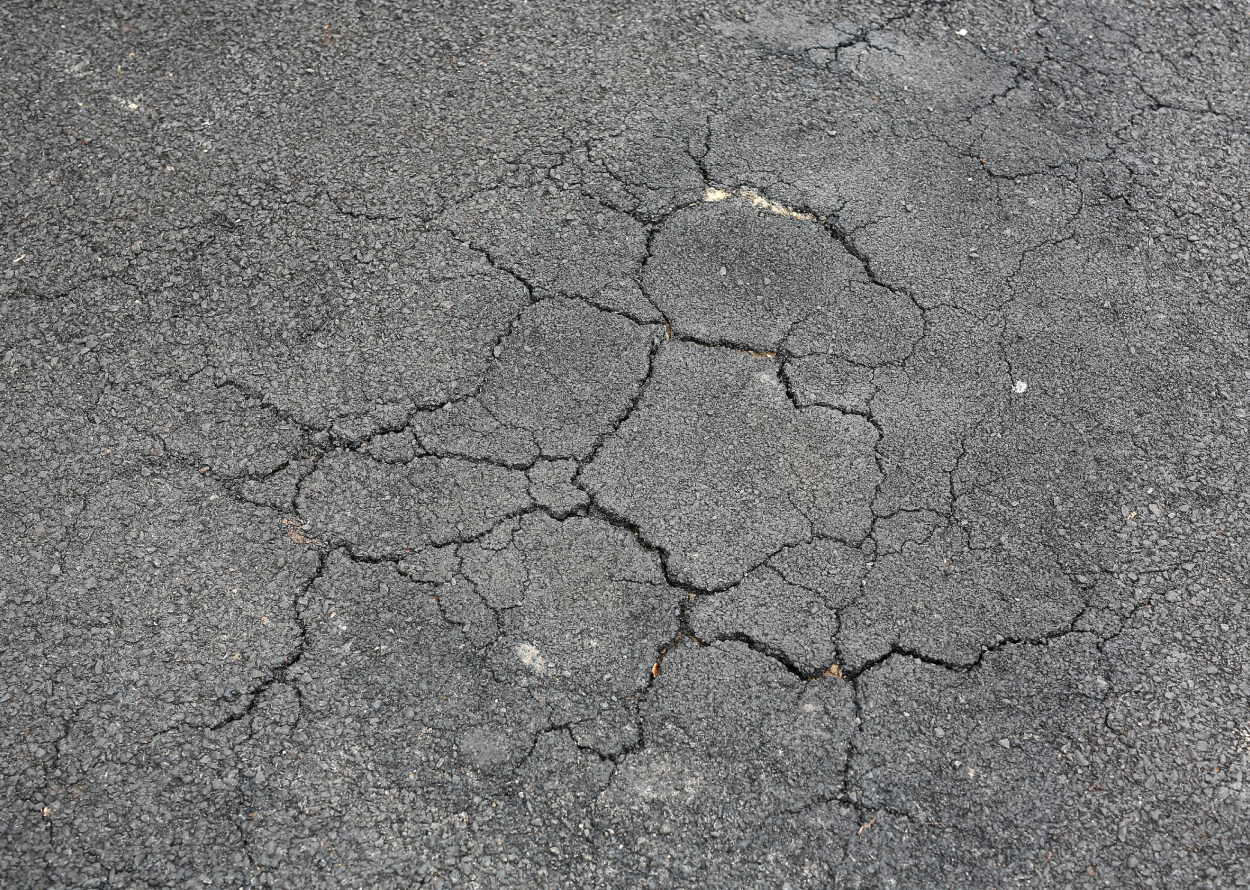
Your new driveway just made it through its first winter. Then spring hits, and you’re staring at a spiderweb of cracks radiating from the apron like something detonated underneath it.
It wasn’t a fluke. It wasn’t bad luck. It was physics — and it happens to thousands of Denver homeowners every single year.
The Front Range is one of the harshest paving environments in the country. We’re not talking about ordinary cold weather. We’re talking about 40-degree temperature swings in a single day, high-altitude UV radiation that degrades binders faster than at sea level, and expansive bentonite clay soils that shift and heave with every freeze-thaw cycle. If your driveway wasn’t engineered for this specific environment, it’s already on borrowed time.
This guide gives you the straight answer on which material holds up best — and more importantly, why.
Why Denver’s Climate Is a Different Animal
Most paving advice you’ll find online is written for a national audience. Denver isn’t a national climate. It’s its own category.
Here’s what you’re actually dealing with:
- Freeze-thaw frequency: Denver averages over 150 freeze-thaw cycles per year. Water infiltrates micro-pores in your surface, freezes, expands by roughly 9%, then thaws and contracts. Repeat that 150 times, and even premium materials start to fail.
- Diurnal temperature swings: A 20°F morning can become a 60°F afternoon. That 40-degree daily swing forces your driveway surface to expand and contract constantly — stressing any rigid material at its joints and edges.
- High-altitude UV exposure: At 5,280 feet, UV radiation is significantly more intense than at sea level. For asphalt, this accelerates oxidation of the bituminous binders that hold the surface together, causing it to dry out and become brittle faster than it would in lower-elevation climates.
- Bentonite clay sub-grade: Much of the Denver metro — particularly areas like Green Valley Ranch and parts of the Highlands — sits on bentonite clay. This stuff swells when wet and shrinks when dry. If your sub-base doesn’t account for that movement, no surface material will save you.
Think of it this way: your driveway is only as strong as what’s underneath it. Pouring premium concrete over a poorly prepared clay sub-grade is like putting a new roof on a crumbling foundation. It looks great until it doesn’t.
Asphalt vs. Concrete: How Each Material Actually Performs Here
Asphalt: Built to Flex
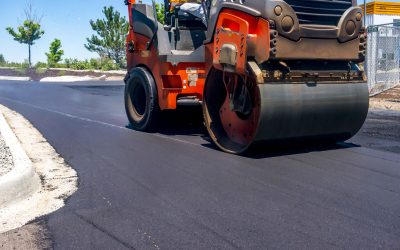
Asphalt’s biggest advantage in Colorado isn’t its cost — it’s its flexibility. The bituminous binders in hot-mix asphalt allow the surface to flex slightly with temperature changes rather than crack under the stress of expansion and contraction.
Think of asphalt like a leather boot. It bends. Concrete is more like a ceramic tile — rigid and strong, but it fractures when forced to flex.
In our experience with [residential concrete installation options] and asphalt installs across the Denver metro, asphalt consistently outperforms concrete in raw freeze-thaw resilience — when it’s properly maintained. That’s the catch. Asphalt’s binders oxidize under Colorado’s intense UV exposure, and an unsealed surface can become brittle and crack-prone within 3–5 years at elevation.
The maintenance math: Plan on sealcoating every 2–3 years (vs. the national recommendation of 3–5). That’s not a flaw — it’s the climate reality. [Preventative sealcoating and crack repair] done on schedule can push an asphalt driveway’s useful life to 20–25 years in the Front Range.
Asphalt at a glance:
- Installation cost: $3–$7 per sq. ft. (Denver metro)
- Lifespan with proper maintenance: 20–25 years
- Freeze-thaw performance: Excellent (flexible binders absorb movement)
- UV vulnerability: High — sealcoating is non-negotiable
- Repairability: Excellent — patches blend in, infrared repair available
Concrete: Rigid, Durable, and Demanding
Concrete is not a bad choice for Denver driveways. But it’s an unforgiving one.
Poured concrete is rigid by design. To handle the inevitable thermal expansion and contraction, it relies on control joints — the intentional cuts you see in concrete slabs — to direct where cracking occurs. When those joints are properly spaced and the concrete is correctly reinforced, they work well. When they’re not, the slab cracks where it wants to, not where you want it to.
The bigger threat to concrete in Denver? Magnesium chloride. CDOT uses mag chloride extensively on Colorado roads, and many homeowners apply it at home for ice control. The problem is that mag chloride penetrates the concrete’s porous surface and reacts chemically with the calcium silicate hydrate that gives concrete its strength. The result is spalling — that surface pitting and flaking you see on concrete driveways after just one or two winters.
A properly cured slab (which means not pouring in temperatures below 40°F — more on that below), sealed with a penetrating concrete sealer, and protected from mag chloride can perform very well for 30+ years. But the margin for error is narrower than with asphalt.
Concrete at a glance:
- Installation cost: $8–$18 per sq. ft. (Denver metro, varies with finish)
- Lifespan with proper care: 30–40 years
- Freeze-thaw performance: Good — requires proper jointing and reinforcement
- UV vulnerability: Low — concrete doesn’t oxidize like asphalt
- Repairability: Harder — patches are visible, color matching is difficult
The Real Decision: Sub-Base Engineering
Here’s the part most homeowners never hear about — and the part that matters most.
In Denver’s clay-heavy soils, the standard recommendation is a 6-to-12-inch compacted Class 6 road base beneath any driveway surface. Class 6 is a crushed aggregate that compacts tightly, drains well, and resists the heaving that bentonite clay causes as it absorbs and releases moisture through the seasons.
Skipping this step — or doing it halfway — is the single most common reason driveways fail prematurely in the Front Range. We’ve seen brand-new concrete slabs heave and crack within two winters because the sub-base wasn’t deep enough or properly compacted. No material on earth can compensate for a failed foundation.
When you’re evaluating contractors, ask directly: How deep is your base preparation, and what compaction testing do you perform? A reputable contractor will give you a specific answer. One who changes the subject is telling you something.
Understanding [how rapid temperature shifts impact curing times] is also part of this equation — the sub-base moisture content and temperature at the time of installation directly affect long-term performance.
What About Permeable Pavers?
Permeable interlocking pavers are worth a mention for Denver homeowners dealing with drainage issues or HOA restrictions. They handle freeze-thaw cycles differently than monolithic surfaces — each individual unit can shift slightly without fracturing, and the joint sand between units absorbs expansion forces.
The trade-off is cost ($15–$30+ per sq. ft. installed) and the need for occasional joint sand replenishment. For most standard residential driveways, they’re not the most cost-effective choice, but they’re genuinely excellent in applications where drainage is a primary concern.
Lifecycle Cost: The 20-Year View
| Asphalt | Concrete | |
| Avg. Install Cost (500 sq. ft.) | $1,750–$3,500 | $4,000–$9,000 |
| Sealcoating (every 2–3 yrs) | $300–$600/cycle | N/A |
| Crack Repair (as needed) | $100–$500 | $200–$1,000+ |
| Estimated 20-Year Total | $5,000–$10,000 | $5,000–$12,000 |
| Lifespan | 20–25 yrs | 30–40 yrs |
Estimates based on Denver metro pricing. Actual costs vary by property size, access, and soil conditions.
The gap is closer than most people expect. Asphalt’s lower upfront cost gets offset by maintenance. Concrete’s higher upfront cost is offset by lower ongoing maintenance — if it’s installed correctly and protected from chemical de-icers.
Conclusion & Next Steps
So which material is right for your Front Range driveway? Here’s the honest answer:
Asphalt is the lower-risk choice for most Denver homeowners. Its flexibility handles freeze-thaw cycles naturally, repairs are easier and less expensive, and the maintenance schedule — while real — is manageable. It’s particularly well-suited to properties on clay-heavy soil where ground movement is a known factor.
Concrete makes sense if you want a longer-lasting surface, prefer lower ongoing maintenance, and are committed to proper sealing and keeping mag chloride off the surface. It rewards careful installation and diligent care.
In both cases, the sub-base is the decision that actually matters most. A properly engineered 6-to-12-inch Class 6 road base, correctly compacted and graded away from your foundation, will do more for your driveway’s longevity than any premium surface material.
If you’re planning a driveway installation or replacement in the Denver metro and want a thorough site evaluation — drainage, soil conditions, and all — the team at Foothills Paving & Maintenance, Inc. has been doing this work in Colorado for over 25 years. We’ll give you a transparent, detailed proposal with no hidden haul-away fees and no vague estimates.
📞 Call us at 303-462-5600 or schedule your free, no-obligation estimate. Our office is open Monday–Friday, 8:00 am–5:00 pm.
Frequently Asked Questions
Q: At what temperature is it too cold to pour or lay a new driveway in Colorado?
For concrete, the general rule is that ambient temperatures must be consistently above 40°F during the pour and for at least 7 days of curing. Below that threshold, water in the mix can freeze before the concrete achieves adequate strength, resulting in a permanently weakened slab. For asphalt, the mix needs to stay above approximately 185°F during compaction, which becomes difficult when air temperatures drop below 40°F, and ground temperatures are near freezing. In practice, most reputable Front Range contractors pause concrete pours below 40°F and wrap up asphalt work by late October or early November.
Q: Why does my concrete driveway pit and flake after only one Denver winter?
That’s spalling, and it’s almost always caused by one of three things: magnesium chloride or rock salt applied during the winter, concrete that was poured or cured in cold temperatures (weakening the surface layer), or a mix that was too wet at the time of installation. The surface paste delaminates from the aggregate beneath it. Prevention requires a penetrating concrete sealer applied before the first winter, avoiding chemical de-icers on new concrete for at least the first year, and ensuring your contractor uses the correct water-to-cement ratio.
Q: How deep should the gravel sub-base be to prevent frost heave in clay-heavy Denver soils?
In Denver’s bentonite clay soils, the standard minimum is 6 inches of compacted Class 6 road base for residential driveways — though 8–12 inches is preferable on lots with confirmed clay content or poor drainage. The sub-base must be compacted in lifts (layers), not all at once, and moisture-tested to ensure proper density. Frost heave occurs when water trapped in the soil freezes and expands upward; a deep, well-draining aggregate base breaks that cycle by preventing water from saturating the sub-grade beneath the slab.