


Quick Summary
- Denver’s 5,280-foot elevation means UV radiation hits your pavement 15–20% more intensely than at sea level — accelerating asphalt binder breakdown significantly faster than most property owners are told.
- The grey surface color spreading across your lot isn’t cosmetic. It’s a chemical warning signal, and by the time it’s visible, oxidation is already months advanced.
- UV damage and freeze-thaw damage aren’t separate problems: UV embrittlement is the accelerant that makes Colorado’s temperature swings structurally destructive.
At 5,280 feet, Denver receives UV radiation with 15–20% more intensity than cities at sea level. That elevation premium isn’t trivial — it’s the difference between an asphalt surface that holds its structural integrity for years and one that begins breaking down before the first winter cycle arrives.
By the time the grey oxidized color is spreading across your lot, the chemical process driving it is already months ahead of what you can see. The question isn’t whether your pavement will oxidize — it’s whether you act before the cracks follow.
What Is the Asphalt Binder — and Why Does It Matter?
Asphalt pavement is two things: aggregate (crushed stone, gravel, sand) and the asphalt binder holding it together. The binder —chemically known as bitumen— is what gives pavement its flexibility. When a loaded delivery truck crosses your parking lot or when Denver swings from 68°F to 22°F overnight, the binder’s elasticity is what keeps the surface from fracturing under that stress.
Within the binder, two chemical fractions do the work: maltenes and asphaltenes. Maltenes are the softer, fluid components responsible for flexibility. Asphaltenes provide structural rigidity. A healthy binder maintains balance between them. UV radiation — at any altitude — begins systematically destroying that balance from the day your pavement is laid.
At Denver’s elevation, that process runs faster than the national figures your last contractor probably quoted you.
How High-Altitude UV Radiation Attacks the Binder
Not all UV radiation behaves the same way. UV-A (longer wavelength) penetrates the surface and generates heat. UV-B (shorter, more energetic) is the molecular disruptor — it initiates photo-oxidation by breaking molecular bonds within the binder itself.
Here’s what that looks like at the chemistry level: UV-B generates free radicals within the bitumen matrix. Those free radicals react with oxygen to form new compound groups — primarily carbonyls and sulfoxides. These compounds don’t flex. They’re rigid. As they accumulate, the binder progressively hardens, loses its maltene content, and becomes brittle. Research from the University Transportation Research Center confirms that UV photo-oxidation is measurable and that its rate scales directly with UV intensity.
Denver’s average July UV Index is 8.23 — higher than Miami’s approximately 7.5 and well above Chicago’s 6.5. Colorado is a sun-damaged state. Most pavement maintenance conversations here focus on winter, and the UV load doing quiet structural damage from May through September is consistently underestimated.
Why the “Grey Creep” Is a Warning Sign, Not Just an Aesthetic Issue
Fresh asphalt is deep black because the oil-rich binder saturates the surface. As photo-oxidation advances, that binder hardens, the lighter aggregate beneath begins to show through, and the surface shifts to that familiar steel-grey tone. What looks like fading is actually binder migration and depletion — a structural process, not a cosmetic one.
At this stage, two risks increase sharply:
- Raveling — aggregate begins to loosen from the surface because the binder can no longer hold it
- Freeze-thaw vulnerability — a brittle, oxidized surface fractures under temperature stress that a flexible surface would absorb without incident
If you’re watching that grey spread season by season across your lot, you’re not observing a cosmetic trend. You’re observing a structural one in progress.
The UV + Freeze-Thaw Compounding Effect
Most contractors —and most content on this topic— treat UV damage and freeze-thaw damage as separate problems on separate seasonal timelines. That framing is incomplete, and it’s why Denver lots sometimes show cracking patterns that seem disproportionate to their age.
UV oxidation is the accelerant that makes freeze-thaw damage catastrophic.
When Colorado temperatures swing — and they will, often 40–50°F within a single day during shoulder seasons — a healthy, flexible binder absorbs that movement. Water enters micro-cracks, freezes, expands, and causes localized damage, but the pliable binder limits how far that stress travels structurally.
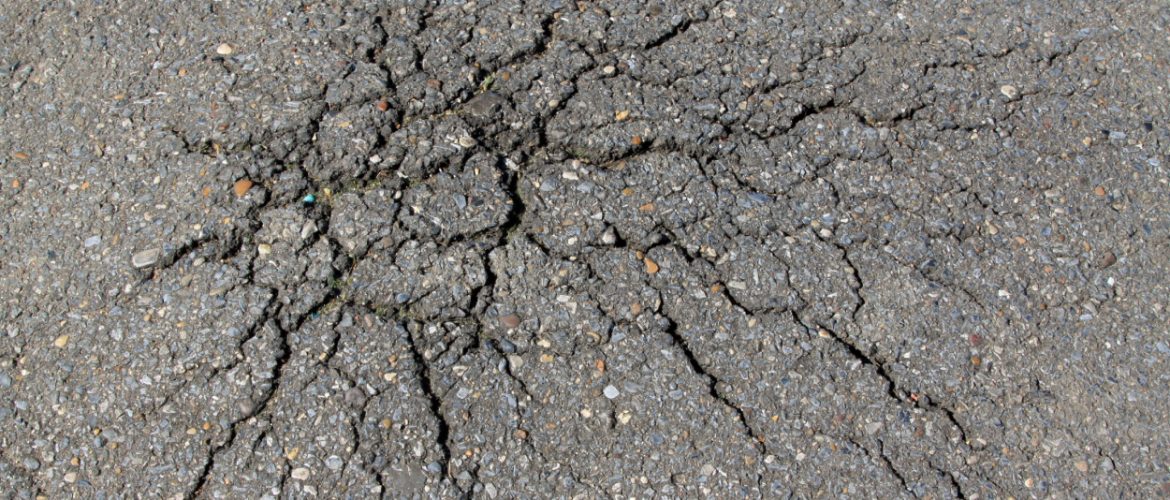
An embrittled, oxidized binder has almost no capacity to absorb the same movement. The freeze-thaw cycle that causes a hairline crack in a maintained surface causes a structural fracture in an oxidized one. The combined stressors can reduce pavement load-bearing capacity by up to 30% under Denver conditions.
A property manager who addresses winter damage every spring but ignores the UV load accumulating all summer is treating the symptom, not the cause.
If you’re already seeing surface graying or early hairline cracks on your property, our team offers detailed assessments and transparent, written proposals — no obligation. Call or reach out online to schedule a review.
How Premium Sealcoating Blocks UV Oxidation
A properly applied sealcoat functions as a UV-barrier film over the asphalt binder — intercepting UV-B radiation before it can initiate photo-oxidation. The sealcoat takes the radiation load, so the binder doesn’t have to.
Not all sealants deliver equivalent protection. The difference between a commodity product and a premium UV-blocking sealcoat applied by our Denver team comes down to material formulation and application depth. Commercial-grade sealants use refined coal tar or asphalt emulsion formulations with additives specifically engineered for Colorado’s climate — higher UV resistance, reliable adhesion under temperature-variable conditions, and a film thickness that holds through a full freeze-thaw season.
Application timing matters as much as product quality. The optimal window for sealcoating is before oxidation is visible — when the binder is still flexible enough that the sealcoat forms a complete bond with the surface. Once oxidation has visibly progressed, bond adhesion weakens and the sealcoat’s protective effectiveness drops.
When Sealcoating Alone Isn’t Enough
This is the practitioner’s knowledge that a laboratory analysis rarely includes: if oxidation has progressed to aggregate raveling or cracking, sealcoating must not be the first step.
Applying sealcoat over a cracked or raveling surface seals in the damage rather than protecting against further deterioration. The correct sequence in those cases is:
- Crack sealing to address binder loss before it progresses
- Infrared asphalt repair for oxidation-damaged sections where raveling has begun
- Sealcoating once structural integrity is restored
Skipping this sequence — applying sealcoat over a surface that needed repair first — is one of the most common and most expensive mistakes we see on Denver commercial properties. It delays the diagnosis, not the damage.
How Often Should Denver Properties Be Sealcoated?
National guidelines typically recommend sealcoating every 3–5 years. For the Denver metro area and Colorado Front Range, that interval is too conservative.
Given the elevated UV index, the altitude-accelerated oxidation rate, and the compounding pressure of Colorado’s temperature variability, most commercial properties here should be on a 2–3 year sealcoating cycle — with south-facing or fully unshaded lots trending toward the shorter end of that window.
Factors that compress the recommended interval:
- South-facing exposure — direct sun load across more daylight hours
- Unshaded lots — no canopy or building shadow buffering peak UV
- High traffic volume — mechanical abrasion accelerates surface binder loss
- Dark pavement areas — absorb more heat, compounding thermal oxidation
The most systematic way to manage this is our custom five-year maintenance program for Colorado properties — a structured schedule combining sealcoating, crack sealing, and periodic condition assessments into a single coordinated plan. It removes the timing guesswork and keeps surfaces in the protective window before oxidation compounds into a repair conversation.
The Denver Property Manager’s Bottom Line
UV damage at Colorado’s elevation isn’t a theory. The altitude data, the chemistry, and 25+ years of direct field observation across Denver-area lots confirm it: asphalt surfaces here oxidize faster than national figures account for, and it’s that embrittlement — not the snow — that sets the stage for structural damage.
Foothills Paving & Maintenance has spent over two decades working specifically in this climate. We’ve watched oxidation patterns develop across elevations, assessed surfaces ranging from freshly paved to structurally compromised, and built maintenance programs around the actual sequence of damage — not just the most visible symptoms. That field experience is what translates the science into decisions you can act on before the problem changes in scope and cost.
Schedule Your Free Pavement Assessment
Our team will evaluate your surface’s current oxidation stage, identify any sections where crack sealing or infrared repair should precede sealcoating, and deliver a detailed written proposal with transparent pricing — no vague estimates, no hidden costs.
Call us or contact us online to schedule your free assessment. We serve the Denver metro area, the Foothills, and Northern Colorado, Monday through Friday, 8:00 am to 5:00 pm.
Foothills Paving & Maintenance, Inc. | 5040 Tabor St., Wheat Ridge, CO
Active members of the asphalt industry associations and the team behind Denver’s most comprehensive five-year commercial maintenance program.
Frequently Asked Questions
How does UV radiation break down asphalt pavement?
UV-B radiation triggers photo-oxidation within the asphalt binder — generating free radicals that react with oxygen to form rigid carbonyl and sulfoxide compounds. These replace the flexible maltene fractions responsible for the binder’s elasticity, causing the surface to harden, grey, and eventually crack. The process is cumulative and largely invisible until oxidation is well advanced.
Does Denver’s altitude make asphalt deteriorate faster?
Yes, measurably. Denver’s elevation of 5,280 feet means UV radiation arrives 15–20% more intensely than at sea level. The city’s average July UV Index of 8.23 exceeds Miami (7.5) and Chicago (6.5). That increased UV intensity accelerates photo-oxidation in the asphalt binder, shortening the effective maintenance window compared to national averages — which is why Colorado-specific sealcoating schedules run shorter than what most national guidelines recommend.
What’s the difference between UV damage and freeze-thaw damage on asphalt?
UV damage is chemical — it hardens and embrittles the asphalt binder through photo-oxidation. Freeze-thaw damage is mechanical — water enters cracks, freezes, expands, and fractures the pavement from within. In Denver, these aren’t independent seasonal problems: UV oxidation strips the binder’s flexibility, which is exactly what protects pavement from freeze-thaw stress. An oxidized surface exposed to Colorado’s temperature swings sustains far more severe structural cracking than a properly sealed, flexible surface would under the same conditions.