


Quick Summary
- Traditional asphalt patches fail in Colorado primarily because of cold joint separation — water infiltrates the seam, freezes, expands, and the patch breaks apart within one or two winters.
- Infrared repair heats the existing asphalt, integrates new material, and compacts everything into one continuous surface — eliminating the cold joint entirely.
- Colorado’s elevation and daily temperature swings create pavement stress conditions more aggressive than most of the country. A repair method that ignores this climate context is a temporary fix, not a solution.
If you’ve paid to have a pothole or cracked section patched and watched it fall apart before the next spring thaw, you’re not imagining things — and it’s not bad luck.
The real problem isn’t the patch material. It’s the seam. Traditional patching methods lay new asphalt over or beside existing pavement, creating a cold joint — a boundary line where old and new material never fully bond. In Colorado’s climate, that joint is a failure point waiting to be activated.
Infrared asphalt repair works differently. By heating the existing pavement to roughly 325°F, integrating fresh material, and compacting the entire area as one continuous surface, it eliminates that seam. No cold joint means no gap for water to enter, freeze, and expand. That’s the core of why it performs differently — and why it matters specifically in Denver.
What Is Infrared Asphalt Repair?
Infrared asphalt repair uses a specialized infrared heating panel to soften a damaged section of existing pavement — typically to a depth of 2–3 inches — without burning or destroying the material. Once softened, the crew rakes and scarifies the area, adds fresh hot-mix asphalt and a rejuvenating agent to restore the asphalt binder’s flexibility, then compacts everything together.
The result is a monolithic repair — one continuous surface rather than a patch sitting on top of or next to the original pavement.
Why Traditional Patches Keep Failing in Colorado
Colorado’s pavement experiences some of the most aggressive thermal stress conditions in the lower 48 states — not because of snowfall volume alone, but because of temperature amplitude.
During shoulder seasons (late September through November, and again in March and April), Denver can swing 40–50°F in a single day. A morning in the mid-20s followed by an afternoon in the mid-60s isn’t unusual. That means a poorly bonded asphalt patch isn’t just cycling through one freeze-thaw event per week — it may experience multiple micro-expansion and contraction cycles within a 24-hour period.
According to the Federal Highway Administration’s pavement distress guidance, repeated thermal cycling at joint boundaries is one of the primary drivers of localized pavement failure. The patch expands, contracts, and slowly walks apart from the surrounding material — a process that’s nearly invisible until the edges start to crumble.
The Cold Joint Problem
A cold joint is any interface between existing asphalt and new material that was never thermally bonded.
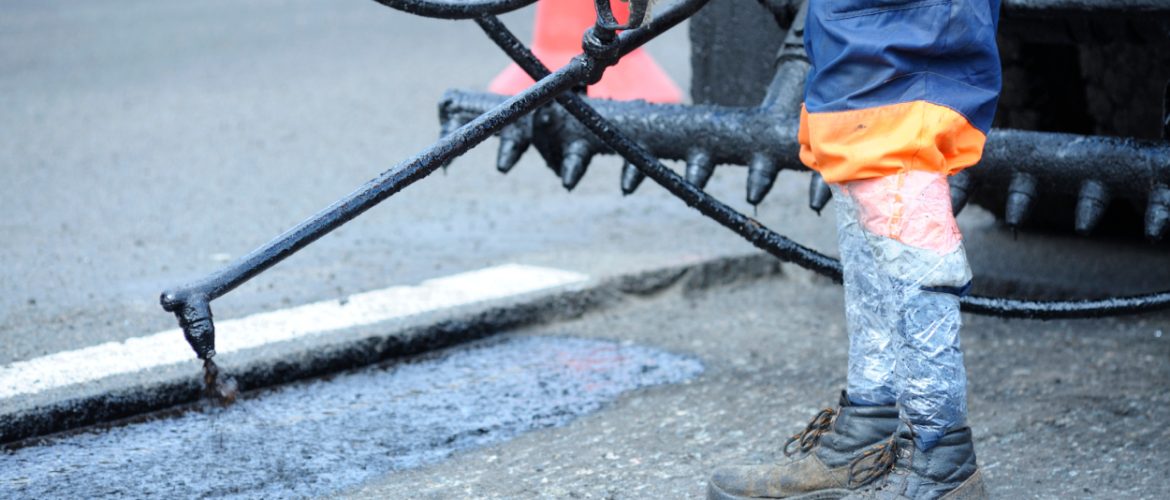
When a crew cuts out a damaged section and fills it with new asphalt — or presses cold-patch material into a pothole — the new material cools and shrinks as it sets. The boundary between old and new never fully fuses. Water finds that boundary. It freezes. It expands. The patch loosens.
This isn’t always a craftsmanship failure. It’s a physics problem. Cold-patch and cut-and-replace methods create cold joints by definition, and in a climate with Denver’s temperature swings, those joints are under stress from day one.
There’s also a second factor that’s specific to our elevation. At roughly 5,280 feet — combined with 300+ days of sunshine annually — the Denver metro experiences significantly accelerated UV-induced asphalt oxidation compared to lower-elevation markets. Oxidized asphalt becomes brittle and loses its binding flexibility. A new patch surrounded by oxidized pavement is structurally isolated before the first winter even arrives.
How Infrared Creates a Seamless, Watertight Bond
The infrared process addresses both problems at once.
Step 1 — Heat. The infrared panel heats the damaged area and several inches of surrounding pavement to approximately 325°F, softening the existing material without combustion or burning off the binder.
Step 2 — Scarify and rake. The softened asphalt is loosened and raked to expose the oxidized layer beneath the surface.
Step 3 — Rejuvenator and fresh material. A liquid rejuvenating agent restores binder flexibility in the surrounding pavement — the brittle, oxidized asphalt is rehydrated. Fresh hot-mix material is added as needed to bring the section to the proper grade.
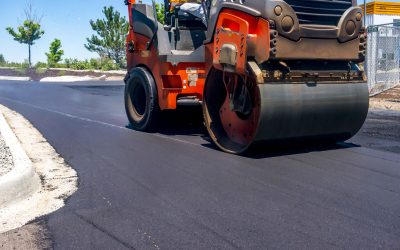
Step 4 — Compact. Old softened asphalt, fresh material, and rejuvenated surrounding pavement are compacted together as a single mass.
The outcome is a repair with no cold joint. The transition from the repaired area to the surrounding pavement is monolithic. Water has no seam to penetrate. The rejuvenated material moves with thermal cycles rather than cracking against them.
This is why the common claim that “infrared only fixes surface damage” misses the mark. When executed correctly with commercial-grade equipment and proper rejuvenator application, the repair addresses shallow sub-surface oxidization — it’s structural, not cosmetic. That mischaracterization typically comes from infrared work done with undersized equipment or without a rejuvenator step.
Infrared vs. Traditional Patching — Head-to-Head
| Infrared Repair | Cold Patch | Cut & Replace | |
| Bond type | Seamless thermal bond | Cold joint | Cold joint at cut edges |
| Durability | Long-lasting with proper execution | 1–2 seasons typical | Multi-year, but seams remain |
| Weather window | Flexible; effective in cooler temps | Limited; sets poorly in cold | Requires warmer temps for full cure |
| Water infiltration risk | Very low — no seam | High | Moderate |
| Best use case | Localized potholes, utility cuts, edge cracking, cold joints | Temporary emergency fill | Large or deep structural failure |
| Cost vs. replacement | Significantly lower | Lowest upfront; highest long-term | Highest; warranted for subbase failure |
Not sure which repair applies to your property? Our team offers free, no-pressure assessments — we’ll evaluate your pavement and give you a straight answer on what it actually needs. Schedule your free estimate, and we’ll take a look.
When Infrared Is the Right Call — And When It Isn’t
Infrared repair performs best on localized, surface-to-shallow-subsurface damage in pavement with a structurally sound base. The right applications include:
- Potholes and localized depressions
- Utility cut repairs after gas, water, or electrical work
- Low spots and birdbaths that collect and hold water
- Edge cracking and cold joint failure
- Isolated areas of surface raveling or oxidation
Where infrared isn’t the right answer: widespread subbase failure or alligator cracking across large areas. If the structural base beneath the asphalt has deteriorated from water infiltration, chronic heavy loads, or failed soil, infrared can’t fix what’s happening below the surface layer. In those cases, full-depth patching or a broader, comprehensive asphalt repair and maintenance plan is the appropriate path.
We’d rather tell you that clearly upfront than sell you a repair that won’t hold. It’s how we’ve maintained client relationships that outlast any individual project.
What the Foothills Paving Process Looks Like
Every infrared repair we perform starts with a detailed assessment — not an assumption. We evaluate damage extent, surrounding pavement condition, drainage patterns, and what’s underneath before recommending anything.
From there, we provide a transparent written proposal: scope, materials, timeline, and pricing. No vague estimates, no surprises on-site.
Our crews use industry-leading infrared equipment and premium hot-mix materials specifically engineered for Colorado’s climate — not a one-size-fits-all spec sheet. Compaction is meticulous; the work isn’t finished when the surface looks flat, it’s finished when the repair meets our quality standard.
After the repair is complete, asphalt sealcoating is often the logical next step — sealing the repaired surface and the surrounding pavement against further UV oxidation and water infiltration. It completes the protection story and extends the life of everything underneath.
If you’re managing a parking lot, an HOA property, or a commercial driveway, our infrared asphalt repair service is designed to protect your property investment with a targeted solution that’s built for this climate — not just this season.
Stop Paying for the Same Repair Twice
The core reason infrared outperforms traditional patching in Colorado isn’t marketing — it’s thermal physics. A repair method that creates a cold joint in a climate with 40–50°F daily temperature swings is working against itself from day one. Infrared eliminates that failure point at the source.
When performed correctly with commercial-grade equipment and proper rejuvenator application, our infrared asphalt repair service delivers a watertight, thermally bonded repair that’s built to handle Colorado’s shoulder seasons — not just survive them.
Ready to Fix It Right the First Time?
Contact Foothills Paving & Maintenance, Inc. today.
We serve the Denver metro area, the Foothills, and Northern Colorado.
Monday–Friday, 8:00 am–5:00 pm | 5040 Tabor St., Wheat Ridge, CO
Frequently Asked Questions
How long does infrared asphalt repair last?
When performed correctly with commercial-grade equipment, proper rejuvenator application, and thorough compaction, infrared repair on localized damage in otherwise sound pavement typically lasts 10–15 years or more. The surrounding pavement condition and base integrity are the main variables — a well-executed repair in deteriorated surrounding asphalt will still significantly outlast a cold patch, but a proper assessment matters. Pairing the repair with sealcoating extends the surface life further.
Can infrared asphalt repair be done in cold weather?
Yes — and this is one of its practical advantages over traditional hot-mix methods. Because the process generates its own heat rather than relying on ambient temperature for material curing, infrared repairs can be performed in temperatures that would make standard hot-mix placement unreliable. Extreme cold does require crew judgment and proper pre-heating protocols. Our team evaluates site conditions before every job to confirm the repair will meet our quality standard.
How much does infrared repair cost compared to replacing the asphalt?
Infrared repair typically runs 40–60% less than full-depth removal and replacement on localized damage, and significantly less than a full overlay. The cost advantage compounds when you factor in longevity — a repair that holds for a decade versus one that needs re-patching every season. We provide itemized, transparent estimates so you can evaluate the real cost-per-year of each option before committing to anything.