


Quick Summary
- Most driveway cracks in Wheat Ridge aren’t a surface problem — they’re a subgrade problem that started before the first shovel of asphalt was ever poured.
- Colorado’s freeze-thaw cycles and high-altitude UV exposure accelerate failure, but only when the structural foundation beneath the pavement is compromised.
- Budget contractors skip the base preparation steps that cost them time and money. That’s what you’re actually paying for when cracks keep coming back.
You patch the crack. It comes back. You patch it again. Same spot, same result — sometimes worse.
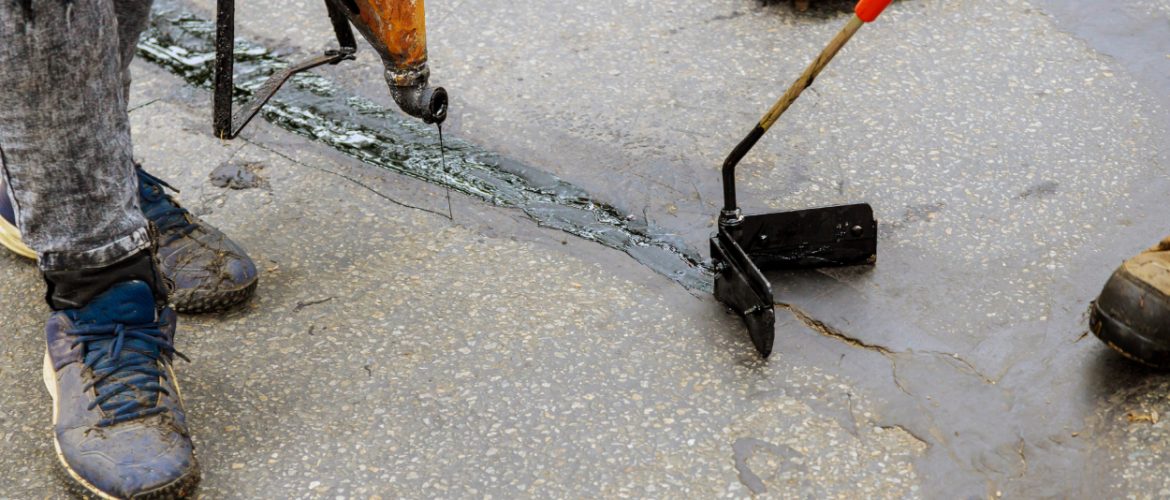
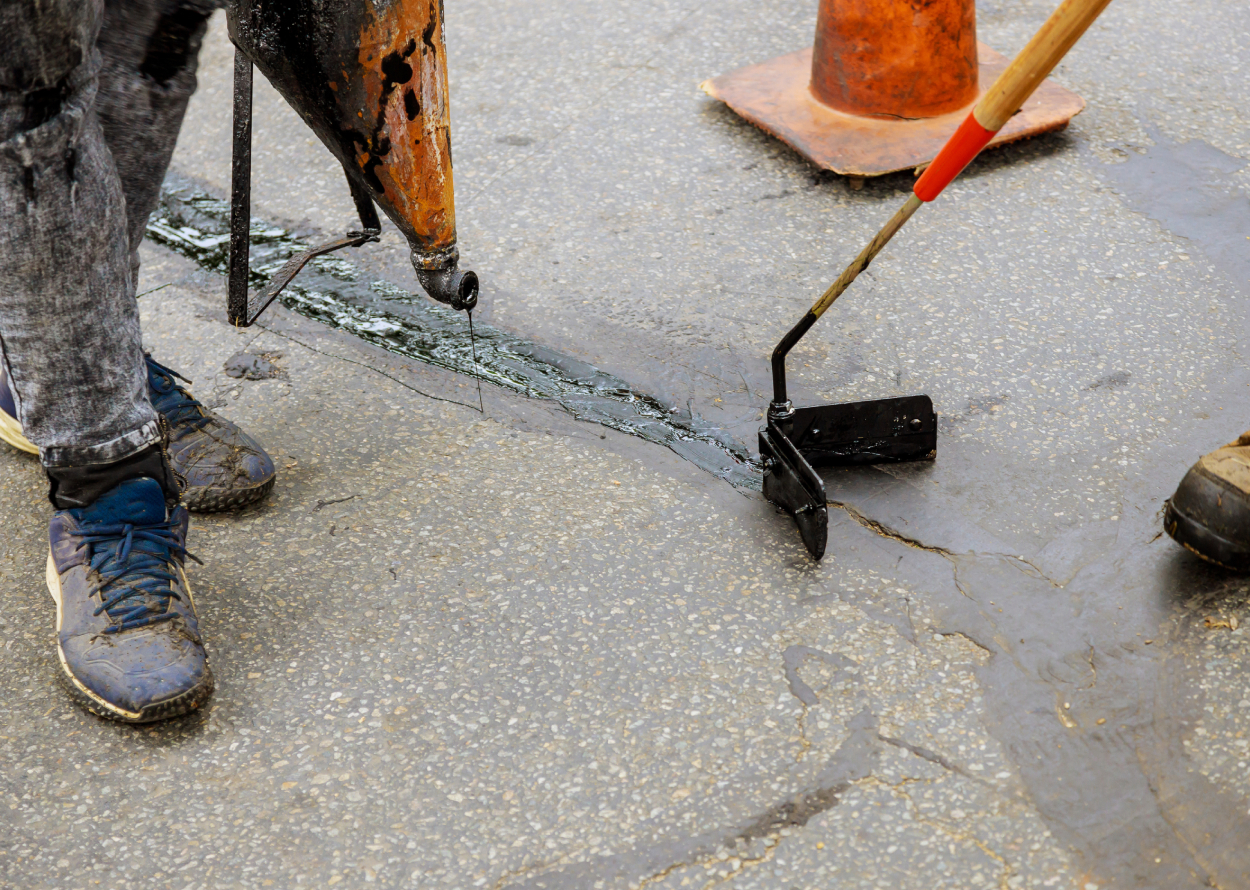
If that sounds familiar, you’re not dealing with a surface problem. You’re dealing with a structural one, and no amount of store-bought cold patch is going to fix what’s happening three to six inches underground.
Here’s what’s actually going on beneath your Wheat Ridge driveway — and why understanding it will save you from spending thousands of dollars on repairs that were doomed before the crew even showed up.
Your Driveway Is Only as Strong as What’s Underneath It
Think of your asphalt like the top layer of a sandwich. The bread on top looks fine, but if the filling underneath is soggy and collapsing, the whole thing falls apart.
That “filling” is your subgrade — the native soil that everything else is built on — and the base rock layer that sits directly beneath the asphalt. When either of those layers is improperly prepared or compacted, the pavement above has no real structural support. It flexes under the weight of vehicles, develops micro-fractures, and eventually cracks open.
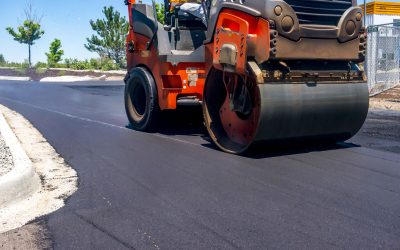
What is proper base preparation? A quality installation involves excavating to the correct depth, grading the subgrade for drainage, adding a layer of crushed aggregate base rock (typically 4–6 inches for residential driveways), and compacting it to a minimum density — usually 95% of Proctor density — using industrial vibratory plate compactors or a drum roller. This process takes time and equipment. It’s also the first thing a budget contractor will cut when they’re trying to sharpen a bid.
Why Wheat Ridge’s Winters Make a Weak Subbase Catastrophic
Colorado’s freeze-thaw cycle is relentless, and at Wheat Ridge’s elevation, it hits hard. Temperatures can swing 40°F in a single day during the shoulder seasons, and that matters enormously for asphalt.
Here’s the mechanics: water is patient. It finds every hairline crack, every small void, every gap in the base layer. When temperatures drop below freezing, that water expands by roughly 9% in volume. That expansion creates upward pressure — what engineers call frost heave — that pushes against the underside of your asphalt from below.
Do this 30, 40, 50 times over a Colorado winter and spring, and the pavement doesn’t just crack. It fractures structurally.
A properly compacted base rock layer resists this process in two ways. First, it’s dense enough to resist water infiltration in the first place. Second, proper grading channels surface water away from the slab’s edge, so moisture never gets the chance to pool and percolate downward. When those two conditions aren’t met — and they often aren’t in budget installations — you’re essentially building a driveway that’s engineered to fail by February.
The 3 Crack Patterns That Tell You What Went Wrong
Not all driveway cracks are the same. Each pattern is a symptom pointing to a specific hidden cause.
Alligator Cracking — Those interconnected, scaly fractures that look like reptile skin? That’s a subbase failure signature. The pavement has lost its structural support and is flexing under load. Surface sealcoating won’t help here; you need full-depth patching or replacement.
Transverse and Longitudinal Cracking — Long, straight cracks running across or along the driveway are typically caused by two things: thermal contraction from Colorado’s dramatic temperature swings, and binder oxidation. At Denver-area elevations, UV radiation is significantly more intense than at sea level. Over time, that UV exposure dries out the liquid asphalt binder — the “glue” holding the aggregate together — making the pavement brittle. Once it’s brittle, normal vehicle weight is enough to crack it.
Edge Cracking — Cracks along the driveway’s perimeter usually indicate a lack of lateral support. This can be caused by soil erosion, poor drainage at the edges, or invasive tree root pressure pushing upward from below — a surprisingly common issue in Wheat Ridge’s older, tree-lined neighborhoods.
What Budget Contractors Skip (And What We Don’t)
This is the part most contractors won’t tell you.
When a paving bid comes in significantly lower than others, something is being cut. In our 25+ years of professional asphalt paving installation across the Denver metro area, we’ve seen the same shortcuts repeated over and over:
- Skipping the excavation depth. Proper residential driveway prep requires removing 8–12 inches of existing material. Cutting that to 4–5 inches saves time but leaves an inadequate base.
- Under-compacting the subgrade. Without achieving that critical 95% compaction density, the base will settle unevenly under load — especially in Wheat Ridge’s clay-heavy soils, which shift and swell with moisture.
- No drainage grading. A flat or improperly sloped driveway is a water trap. Water pooling at the edges or center will find its way into the base layer every single time.
- Thin asphalt lift. Residential driveways should have a minimum of 3 inches of compacted hot-mix asphalt. Budget jobs often deliver 1.5–2 inches. That’s not a driveway — it’s a cosmetic overlay waiting to fail.
The Foothills Paving & Maintenance process starts with a thorough site evaluation: we assess your existing drainage, test soil conditions, and determine the correct base depth before a single piece of equipment rolls in. You get a detailed written proposal with transparent pricing — no vague estimates, no hidden costs for subgrade excavation discovered mid-project.
Colorado Soils Add Another Layer of Complexity
Wheat Ridge sits on a mix of clay-heavy and expansive soils that behave very differently from the sandy loams you’d find in other parts of the country. Clay soils absorb water, swell, and then shrink as they dry — a movement cycle that’s hard on any structure sitting above them.
In some cases, proper subgrade preparation for a Wheat Ridge driveway requires soil stabilization: adding lime or Portland cement to the native soil to reduce its plasticity and improve its load-bearing capacity. This isn’t standard practice everywhere, but in Colorado, it’s often the difference between a driveway that lasts 20 years and one that starts showing stress fractures in year three.
This is why proper driveway grading techniques and a localized assessment matter so much. A contractor who installs driveways in Florida isn’t equipped to make these calls. We are — and we back every installation with a quality guarantee specifically engineered for Colorado’s climate.
Conclusion & Next Steps
If your Wheat Ridge driveway is showing cracks — especially recurring ones in the same locations — the problem almost certainly started below the surface. Patching the top won’t fix a failing foundation, and every Colorado winter you wait makes the underlying damage worse and the eventual repair more expensive.
The good news: if you catch subbase issues early enough, targeted full-depth patching or an infrared repair can address problem zones without a full replacement. The key is a proper structural assessment before you commit to any repair strategy.
We’d be glad to take a look.Schedule a free structural driveway assessment with our team, and we’ll give you an honest evaluation of what’s actually happening beneath the surface — no sales pressure, just a clear picture of where things stand and what your options are.
Foothills Paving & Maintenance, Inc. | 5040 Tabor St., Wheat Ridge, CO | 303-462-5600 | Mon–Fri, 8:00 am–5:00 pm
Frequently Asked Questions
Q: How does the freeze-thaw cycle in Colorado specifically accelerate crack expansion in residential driveways?
Water infiltrates small voids and hairline cracks in the asphalt and base layer. When temperatures drop below 32°F, that water expands by approximately 9% in volume. The resulting upward pressure — frost heave — widens existing cracks and creates new fractures from below. In Wheat Ridge, this cycle can repeat dozens of times between October and April, compounding structural damage with each freeze.
Q: Why do cracks reappear in the exact same spots even after being filled with store-bought patching materials?
Because store-bought cold patches address the surface symptom, not the structural cause. If the subbase beneath that spot has failed or settled unevenly, the pavement above will continue to flex and re-crack regardless of what’s applied on top. Permanent repair requires addressing the base layer — either through full-depth patching or, in severe cases, excavation and recompaction of the subgrade.
Q: What is the difference between surface-level oxidation cracks and structural cracks caused by subbase failure?
Oxidation cracks are caused by UV degradation of the asphalt binder, making the surface layer brittle. They typically appear as fine, transverse lines across the pavement and don’t indicate a foundation problem — crack sealing and sealcoating can effectively slow their progression. Structural cracks, by contrast, are caused by subbase movement or failure. They tend to be wider, irregular, and often appear in interconnected patterns (alligator cracking). These require full-depth repair, not surface treatment.