


Quick Summary
- That puddle on your driveway isn’t just an eyesore — it’s a warning sign of subgrade failure that Colorado’s freeze-thaw cycles will rapidly turn into a pothole or structural crack.
- Simply patching the surface doesn’t fix the root cause; proper re-grading, subbase compaction, or infrared repair is required to permanently correct low spots.
- Catching the problem early is almost always a targeted, cost-effective repair — waiting until winter does its work is when full replacement becomes the conversation.
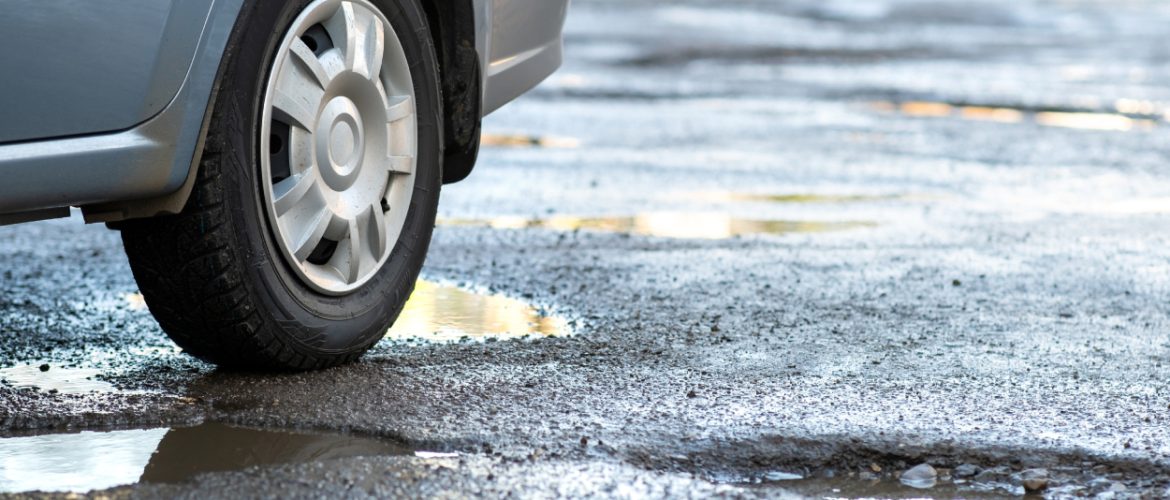
That puddle sitting in the same spot every time it rains? It’s not random. Your driveway is trying to tell you something, and in the Wheat Ridge and Foothills area, ignoring that message has a very specific price tag — one that gets dramatically higher the moment the first hard freeze hits.
Here’s the thing most surface-level articles won’t tell you: the puddle is a symptom, not the problem. The real issue is almost always happening underground.
The Real Reason Water Pools on Asphalt (It’s Not What You Think)
Most homeowners assume a puddle means the asphalt surface has worn down or cracked. Sometimes that’s true. But in the majority of cases we diagnose here in the Foothills area, the surface is just reflecting a failure in the subbase underneath it.
Think of your driveway like a mattress. If the springs beneath the fabric collapse in one spot, the top sags — no matter how good the fabric itself looks. When the compacted gravel and soil base beneath your asphalt settles, erodes, or was never properly compacted to begin with, the asphalt above it slowly sinks into a shallow depression. Water finds that depression every single time.
These low spots are sometimes called “bird baths” in the trade, and they’re deceptively harmless-looking. But they’re not.
What Standing Water Actually Does to Asphalt in Colorado
This is where Wheat Ridge and Foothills homeowners face a challenge that people in milder climates simply don’t. Colorado’s overnight temperature swings are severe.
Here’s the mechanical process:
- Water collects in the low spot and seeps into any micro-crack in the asphalt surface.
- Overnight temperatures drop below freezing — sometimes dramatically, even in early fall or late spring.
- That water expands as it freezes, applying hydrostatic pressure that actively pries the asphalt binder apart from the inside.
- It thaws. It re-freezes. It thaws again.
- By spring, what was a shallow bird bath is now a pothole — or worse, a section of driveway that’s begun to shift laterally and stress your garage foundation edge.
One winter can do years’ worth of damage. That’s not alarmism — it’s just physics, and it’s why a thorough initial site assessment before the cold sets in is so critical.
How to Diagnose the Root Cause (Before Calling Anyone)
Before you reach for a bag of cold patch from the hardware store, do a quick self-diagnosis. Walk your driveway after a rain and ask yourself these three questions:
- Does the puddle appear in a low spot, or near an edge? A center depression almost always points to subbase settling. Edge pooling often indicates landscape encroachment — soil and mulch have crept up and blocked the natural drainage path.
- Is the surface cracked around the puddle? If yes, water infiltration is already happening. The clock is running.
- Did this spot develop gradually, or did it appear suddenly? Gradual settling usually means compaction failure over time. A sudden change can indicate a soil void — sometimes caused by a broken irrigation line or root decay beneath the surface.
This self-check won’t replace a professional evaluation, but it tells you a lot about urgency. A puddle with no surface cracking and no sudden change is a candidate for a targeted repair. A puddle surrounded by alligator cracking or one that appeared after a single storm needs a [thorough initial site assessment] right away.
3 Targeted Solutions — From Least to Most Invasive
There’s no one-size-fits-all answer here, and any contractor who gives you a price without walking the site first isn’t giving you a real quote. That said, here’s how we typically approach it:
1. Infrared Asphalt Repair (Best for Isolated Bird Baths)
For a localized depression without significant subbase damage, Infrared Asphalt Repair is often the most efficient and cost-effective solution. We heat the existing asphalt to around 325°F, rake it to re-establish proper grade, blend in new hot-mix material, and compact it seamlessly.
The result is a watertight, seamless patch — no cold-patch edges that crack within a season, no visible seams that trap water. When done correctly, you genuinely can’t tell where the repair was made.
This is fundamentally different from a cold patch, which is essentially a temporary filler. Cold patch doesn’t thermally bond with the surrounding asphalt, which means it will eventually crack loose and the water problem returns — often in a slightly different spot.
2. Full-Depth Patching with Subbase Correction
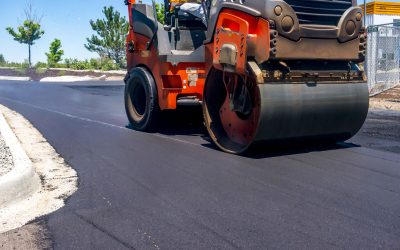
If the subbase itself has failed — meaning the gravel base has settled, washed out, or was under-compacted from the original installation — we need to go deeper. This means removing the affected asphalt section, re-grading and re-compacting the subbase with proper base preparation, and repaving.
This is the only permanent fix when the foundation is the problem. Applying a surface repair over a compromised base is like painting over a water stain without fixing the leak. It looks fine for a few months, then the same failure re-emerges — usually worse.
3. Channel Drains and Catch Basins (When Grading Alone Isn’t Enough)
Sometimes the issue isn’t a depression — it’s that the driveway’s overall slope directs water toward the garage or foundation rather than away from it. In these cases, precise drainage planning means installing a channel drain across the driveway’s low point to intercept and redirect water before it can pool or infiltrate.
This is a longer-term structural fix, and it’s one we recommend pairing with [repairing subgrade failure] if both issues are present.
Why Surface Patching Alone Almost Always Fails
We see this pattern constantly: a homeowner applies a bag of cold patch, the puddle seems to go away for a few weeks, and then it’s back — sometimes in the same spot, sometimes shifted a foot or two.
Here’s why. Cold patching treats the surface symptom, not the structural deficit. The subbase depression is still there. Water still finds the path of least resistance. The patch either sinks into the void or gets undermined at its edges, and the cycle repeats.
After 25 years of diagnosing driveways across the Denver metro and Foothills area, we can tell you: the homeowners who spend a little more on a proper repair the first time almost never call us back for the same problem. The ones who patch-and-hope? We usually see them again within two seasons.
The Preventative Play: Don’t Let Winter Decide for You
If your driveway has a pooling issue right now, the best time to address it is before the first hard freeze. Once freeze-thaw cycles begin working on an active water infiltration point, the damage accelerates exponentially.
A few proactive steps that protect your investment:
- Commercial-grade sealcoating after any repair work closes micro-cracks and creates a water-resistant barrier that slows future deterioration.
- Crack routing and hot-pour sealing on any existing cracks — even ones not near the pooling area — prevents new infiltration points from forming over winter.
- A custom five-year maintenance program keeps drainage issues from compounding year over year, and it’s far cheaper than addressing deferred damage all at once.
Conclusion & Next Steps
A puddle on your driveway is a small problem with a clear solution — but only if you catch it before Colorado’s climate turns it into a structural one. The good news is that most pooling issues we see in Wheat Ridge and the Foothills area are absolutely fixable with a targeted repair, especially when addressed before winter.
The worst outcome isn’t the repair cost. It’s the foundation stress and full-replacement conversation that comes from waiting two or three seasons too long.
If you’re seeing standing water after rain or snowmelt, don’t guess at the cause. Foothills Paving & Maintenance, Inc. offers free, no-obligation estimates — we’ll walk the site, give you a clear diagnosis, and provide a detailed written proposal with transparent pricing. No vague estimates, no hidden costs.
📞 Call us today at 303-462-5600, or stop by our Wheat Ridge office at 5040 Tabor St. We’re available Monday–Friday, 8:00 am–5:00 pm.
Frequently Asked Questions
Q: How can I tell if the puddle on my driveway is caused by a simple surface dip or a failing subbase?
A: The clearest indicator is whether the surrounding asphalt shows cracking or “alligator” patterns. A surface dip with clean, intact asphalt around it is often repairable with infrared re-grading. If the asphalt around the puddle is cracked, soft underfoot, or has shifted, that points to subbase failure, which requires a deeper repair to fix permanently. A professional site evaluation is the only way to know for certain.
Q: Why does patching a low spot in asphalt often lead to the water just pooling in a different area?
A: Because cold patching fills the visible depression without correcting the underlying grade or subbase void. The structural low point is still there — the patch just redirects water slightly until it finds the next path of least resistance. Infrared repair or full-depth patching with proper re-grading eliminates the depression itself, so water has nowhere to collect.
Q: How do freeze-thaw cycles in Colorado turn minor driveway puddles into severe potholes over a single winter?
A: Water seeps into micro-cracks around the pooling area. When temperatures drop below freezing — which happens repeatedly throughout a Colorado winter — that water expands by roughly 9% in volume. That expansion applies hydrostatic pressure against the asphalt binder from the inside, widening cracks and breaking apart the material. After multiple freeze-thaw cycles, what started as a small depression can become a full pothole or a section of structurally compromised pavement.